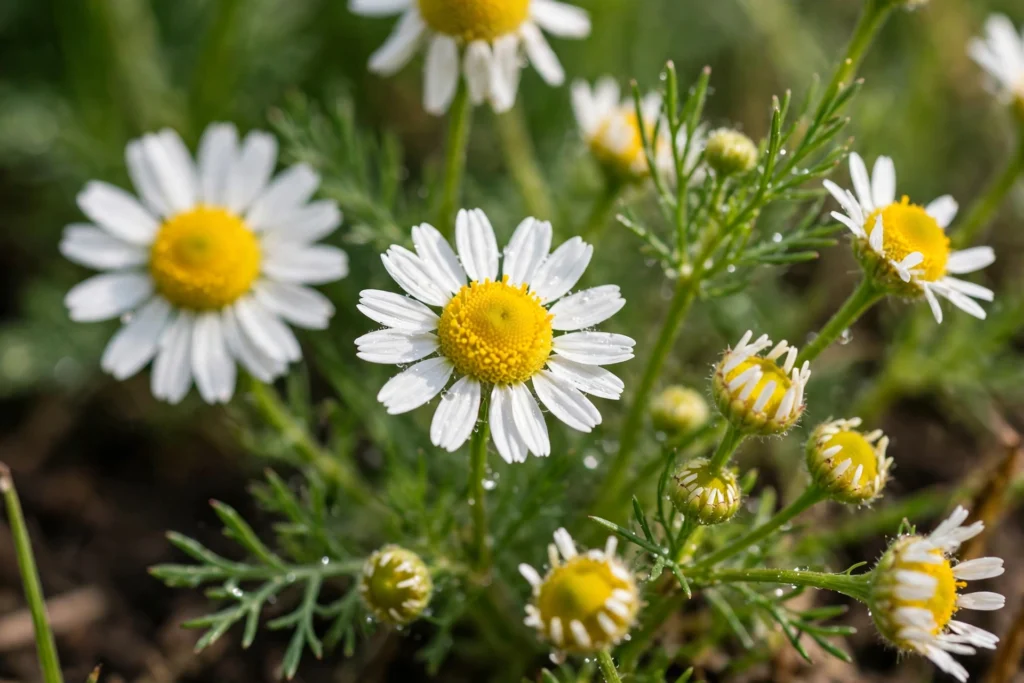
Names in Different Languages
| English | Chamomile |
|---|
| Urdu | بابونہ |
|---|
| Hindi | बबूना |
|---|
| Farsi | بابونه |
|---|
| Unani | Babuna |
|---|
| French | Camomille |
|---|
| German | Kamille |
|---|
Traditional Uses
In European folk medicine, Ayurveda and Unani medicine, chamomile flowers have long been drunk as a calming bedtime tea for sleep, anxiety, stomach upset and colic, and used externally for skin irritation.
Modern Research
Apigenin is the main studied compound. A 2019 meta-analysis of 12 trials found better sleep-quality scores, but the only trial measuring insomnia severity found no change, and NCCIH states there is very little information on chamomile for insomnia. Preliminary studies suggest a standardized extract might help generalized anxiety disorder, but evidence is early, based on small trials, and tea itself has not been tested for anxiety.
Uses
- Sleep and calm support (tea)
- Digestive support (indigestion, gas)
- Skin care (traditional, external)
- Anxiety support (extract, traditional)
Benefits of Use
- Stress-sleep support: may modestly improve self-rated sleep quality and ease mild anxiety symptoms
- Digestive support: traditional use for indigestion, gas and stomach cramps (EU monograph dose for minor gut complaints)
- Skin support: traditional external use for minor skin irritation and rashes
- Calm support: apigenin binds to benzodiazepine receptors, which may explain its mild sedative effect
Safe Dose & Overdose (mg/g)
Raw Herb Form
Safe: 2,000-4,000 mg/day dried flowers as tea (1.5-4 g per cup, 3-4 times daily per EU traditional-use monograph; commonly 1-3 cups/day).
Overdose: No formal overdose limit established; excessive amounts may cause vomiting, and high doses may increase bleeding risk.
Extract Form
Safe: 220-1,500 mg/day standardized extract (anxiety trials used 1,500 mg/day; sleep trials used 400-540 mg/day, divided into 2-3 doses).
Overdose: Not established
Side Effects
- Allergic reactions, including severe reactions (anaphylaxis), especially in people allergic to ragweed, daisies or marigolds
- Nausea and dizziness in some users
- Skin rash from topical use in sensitive people
- Vomiting with excessive amounts
Interactions
- Blood thinners (warfarin): reported interaction, including a case of internal bleeding
- Sedatives and benzodiazepines: may add to drowsiness
- Birth control pills: preliminary studies suggest chamomile may make them less effective
- Liver-processed drugs (CYP450 substrates) and immunosuppressants: chamomile may alter their levels
Sources
DisclaimerGeneral information only — not medical advice. Consult a qualified healthcare professional before use.