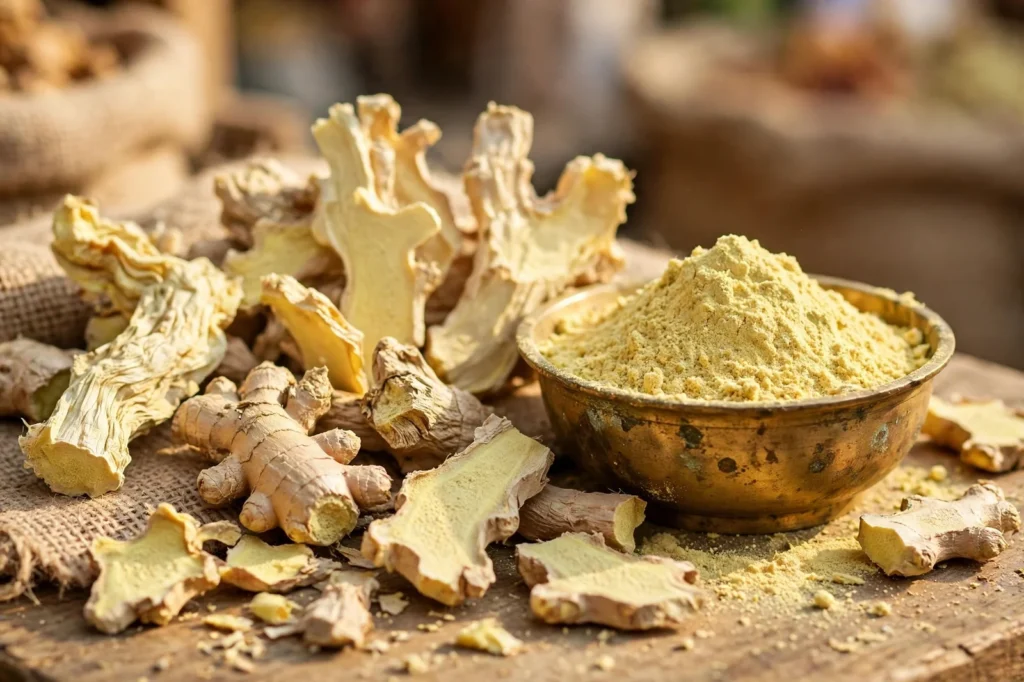
Names in Different Languages
| English | Ginger |
|---|
| Urdu | ادرک |
|---|
| Hindi | अदरक |
|---|
| Farsi | زنجبیل |
|---|
| Unani | Zanjabil |
|---|
| French | Gingembre |
|---|
| German | Ingwer |
|---|
Traditional Uses
In Ayurveda, Unani and Chinese medicine, ginger root has long been used for nausea, indigestion, colds, cough and joint pain, taken fresh, dried, as tea or in cooking.
Modern Research
Gingerols and shogaols are the main active compounds. Clinical evidence is best for nausea (including pregnancy-related and motion-related nausea) and for modest relief of digestive discomfort and muscle soreness. Evidence for cold relief is limited to symptom comfort rather than cure.
Uses
- Nausea relief
- Digestive support
- Cold and cough comfort (tea)
- Joint and muscle soreness support
Benefits of Use
- Nausea relief: may reduce nausea and vomiting, including motion sickness and morning sickness
- Digestive support: may ease bloating, gas and slow digestion
- Respiratory comfort: warm ginger tea may soothe throat irritation and congestion
- Joint support: anti-inflammatory compounds may ease mild joint and muscle soreness
Safe Dose & Overdose (mg/g)
Raw Herb Form
Safe: 2,000-4,000 mg/day fresh root (1-2 teaspoons grated), or 1,000-2,000 mg/day dried powder, divided with food.
Overdose: Above 4,000-5,000 mg/day: heartburn, diarrhoea and mouth irritation are common; long-term safety above 4,000 mg/day is not well studied.
Extract Form
Safe: 500-2,000 mg/day standardized extract (typically 5% gingerols), divided with meals.
Overdose: Not established
Side Effects
- Heartburn and stomach discomfort
- Diarrhoea at high doses
- Mouth irritation
- Mild drowsiness or headache in some users
Interactions
- Blood thinners (warfarin, aspirin, clopidogrel): may increase bleeding risk
- Diabetes medicines: may add to blood-sugar-lowering effects
- Blood-pressure medicines: high doses may add to blood-pressure-lowering effects
- Antacids and stomach-acid medicines: may interact in sensitive users
Sources
DisclaimerGeneral information only — not medical advice. Consult a qualified healthcare professional before use.