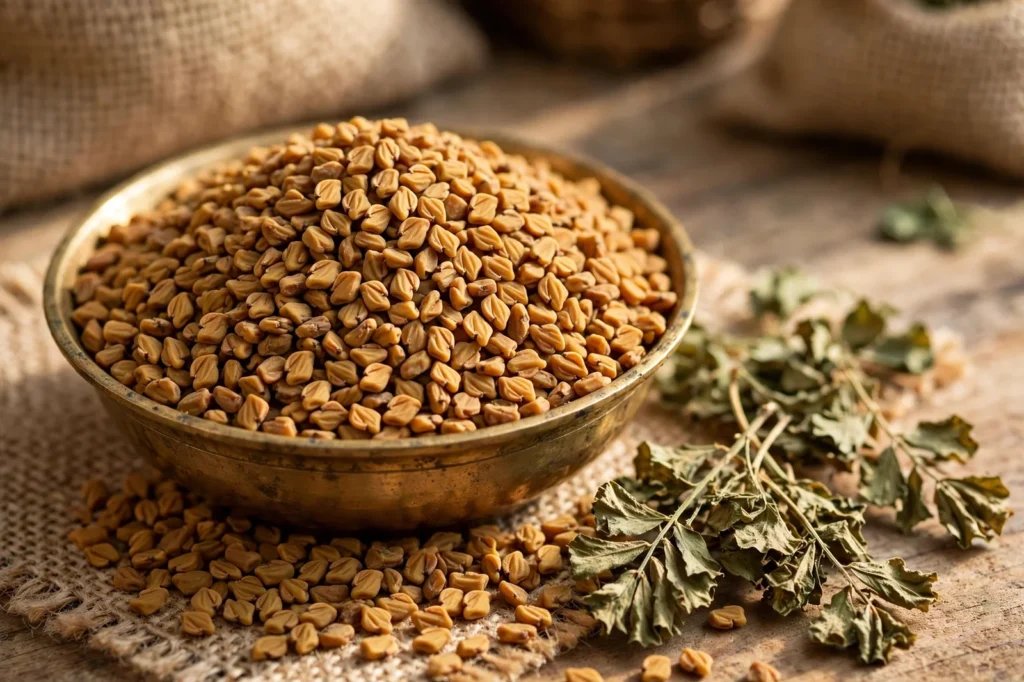
Names in Different Languages
| English | Fenugreek |
|---|
| Urdu | میتھی |
|---|
| Hindi | मेथी |
|---|
| Farsi | شنبلیله |
|---|
| Unani | Hulba |
|---|
| French | Fenugrec |
|---|
| German | Bockshornklee |
|---|
Traditional Uses
In Ayurveda and Unani medicine, fenugreek seeds have long been used for digestive complaints, blood-sugar control, low milk supply in breastfeeding mothers and as a cooking spice and tonic.
Modern Research
Soluble fibre and saponins are the main studied components. Trials show modest blood-sugar and cholesterol improvements, and some evidence for increased milk production. Effects are modest and dose-dependent, and high doses commonly cause digestive upset.
Uses
- Blood-sugar support
- Digestive support
- Cholesterol support
- Traditional lactation support
Benefits of Use
- Blood-sugar support: soluble fibre may slow carbohydrate absorption and modestly improve glucose control
- Digestive support: may ease constipation and indigestion
- Heart support: may modestly lower total and LDL cholesterol
- Male vitality support: testosterone-study extracts suggest modest support for male reproductive health
- Lactation support: traditionally used to support milk production, with mixed trial evidence
Safe Dose & Overdose (mg/g)
Raw Herb Form
Safe: 5,000-10,000 mg/day seed powder (diabetes studies used up to 50,000 mg/day).
Overdose: Above 350 mg/kg body weight (about 21,000 mg for a 60 kg adult) is cited as an overdose-avoidance limit; digestive upset is common above 50,000 mg/day.
Extract Form
Safe: 600-1,200 mg/day standardized seed extract (600 mg/day Testofen-type extract used in testosterone studies).
Overdose: Not established
Side Effects
- Digestive upset, gas, bloating and diarrhoea, common at high doses
- Maple-syrup-like body and urine odour
- Allergic reactions, especially in people allergic to peanuts, chickpeas or soy
- Low blood sugar in sensitive users
Interactions
- Diabetes medicines: may add to blood-sugar-lowering effects
- Blood thinners: may increase bleeding risk
- Hormone therapies: phytoestrogen activity may interfere
- Phenytoin and sildenafil: fenugreek may alter absorption or effects
Sources
DisclaimerGeneral information only — not medical advice. Consult a qualified healthcare professional before use.