Names in Different Languages
| English | Fennel |
|---|
| Urdu | سونف |
|---|
| Hindi | सौंफ |
|---|
| Farsi | رازیانه |
|---|
| Unani | Saunf |
|---|
| French | Fenouil |
|---|
| German | Fenchel |
|---|
Traditional Uses
In Ayurveda and Unani medicine, fennel seed has long been chewed after meals for digestion and fresh breath, brewed as tea for colic, gas and cough, and used traditionally for menstrual discomfort, low milk supply and menopause symptoms.
Modern Research
Anethole, the main active compound, relaxes gut smooth muscle, which supports fennel's traditional digestive use; randomized trials support infant colic relief and modest menstrual-pain relief, and a 2020 trial reported reduced IBS symptoms. Evidence for menopause and lactation support is smaller and mixed. The EMA accepts fennel tea as a traditional medicine for mild spasmodic digestive complaints but limits use to 2 weeks over estragole concerns.
Uses
- Digestive support (gas, bloating, indigestion)
- Menstrual pain support (traditional)
- Infant colic support (traditional)
- Cooking spice and mouth freshener
Benefits of Use
- Digestive support: antispasmodic action may ease bloating, gas and intestinal cramping
- Menstrual comfort: trials report reduced menstrual pain, comparable to common pain relievers in some studies
- Colic support: fennel seed oil emulsion reduced crying in colicky infants in randomized trials
- Menopause support: small trials report reduced hot flashes and improved menopause symptom scores
Safe Dose & Overdose (mg/g)
Raw Herb Form
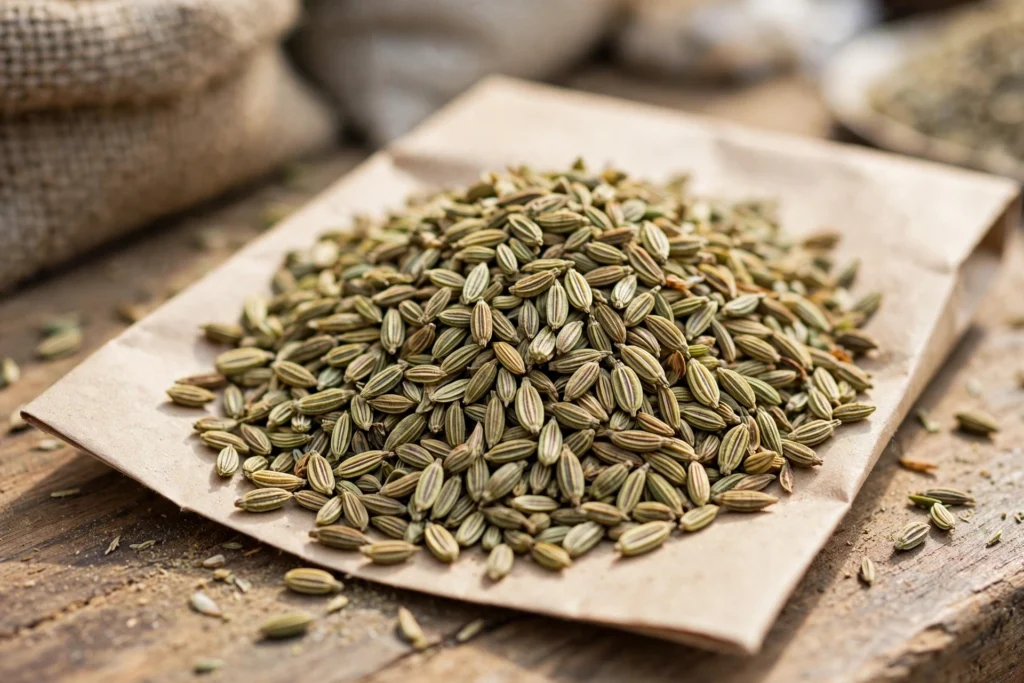
Safe: 1,000-3,000 mg/day seeds (1/2 to 1 teaspoon chewed after meals); European Medicines Agency tea: 1,500 mg seed in 250 mL boiling water, 3 times daily, for up to 2 weeks.
Overdose: Above 3,000 mg/day: photosensitivity risk rises; the European Medicines Agency limits traditional medicinal use to 2 weeks because of estragole, a compound that caused liver tumours in mice at high doses.
Extract Form
Safe: 200-600 mg/day standardized seed extract (trials commonly used 100 mg, 2-3 times daily, or 30 mg oil capsules during menstruation).
Overdose: Not established
Side Effects
- Mild stomach upset, nausea and heartburn in some users
- Allergic reactions, especially in people allergic to celery, carrot, dill or mugwort pollen
- Photosensitivity (increased sun sensitivity) at high doses
- Uterine stimulation at medicinal doses — avoid in pregnancy
Interactions
- Hormone therapies and hormone-sensitive conditions: anethole has mild estrogen-like activity
- Blood thinners: may increase bleeding risk in theory
- Seizure medicines: fennel may interact with some anti-seizure drugs
- Liver-processed drugs: fennel may alter cytochrome P450 enzyme activity
- Diabetes medicines: may add to blood-sugar-lowering effects
Sources
DisclaimerGeneral information only — not medical advice. Consult a qualified healthcare professional before use.