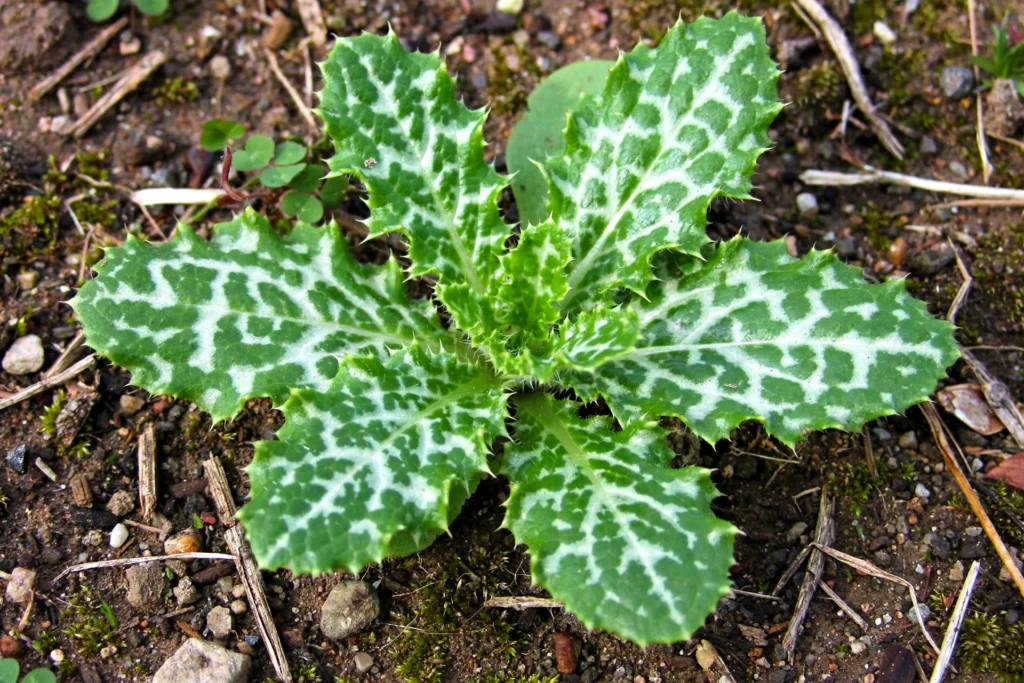
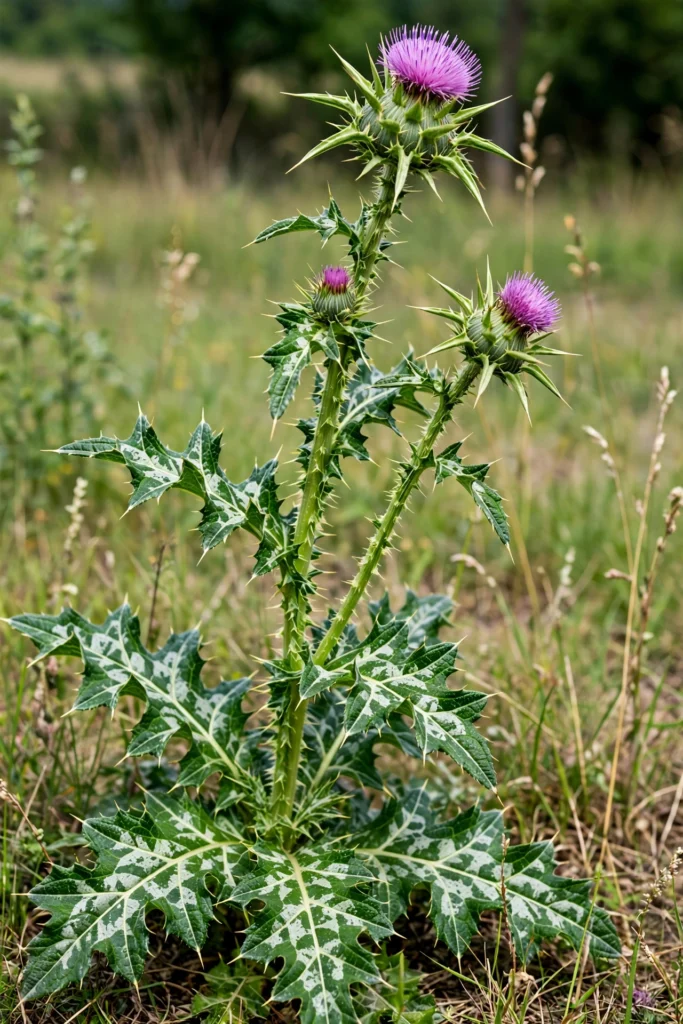
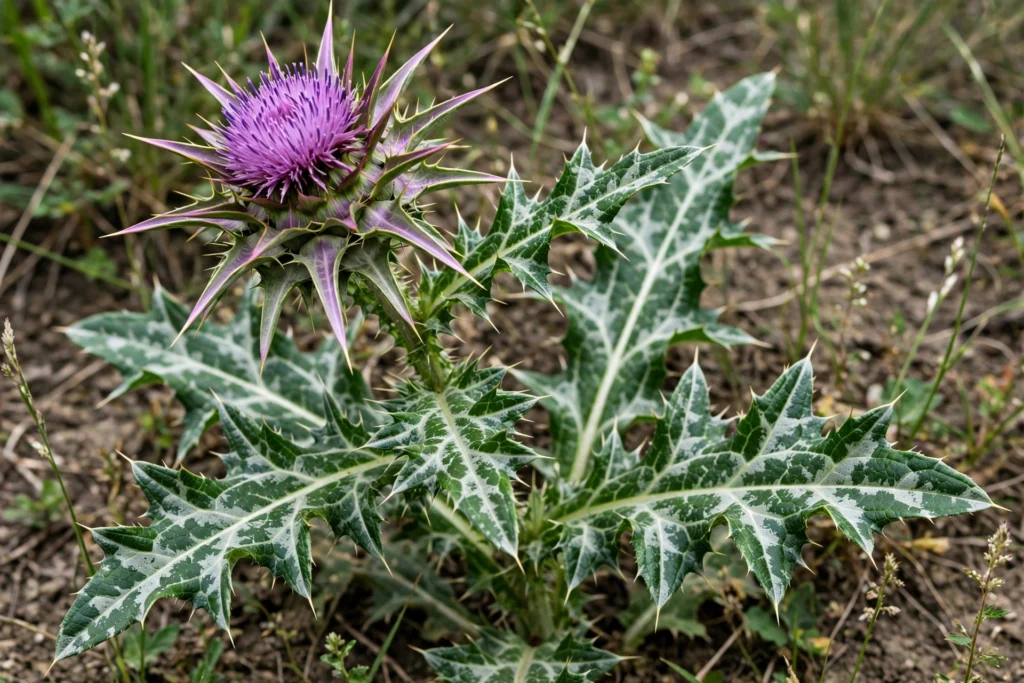
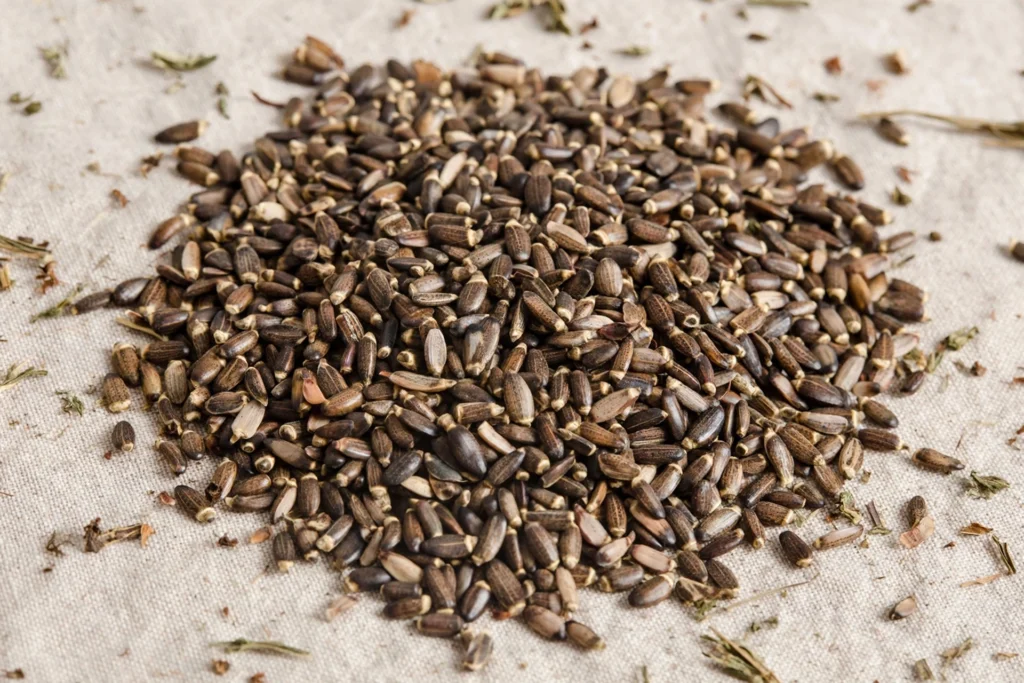
Milk thistle (Silybum marianum) is a tall, spiky thistle in the daisy family, native to the Mediterranean regions of Europe, North Africa and the Middle East, and now widespread in Europe, the Americas and parts of Asia including Kashmir. Its name comes from the milky-white veins on its leaves and the milky sap they release. The seed extract, silymarin, has been used for liver complaints in European herbal medicine for over 2,000 years.
In European folk and herbal medicine, milk thistle seed was used for liver and gallbladder disorders, jaundice, and digestive complaints, and as a bitter tonic to stimulate appetite. It has also been used traditionally in Unani practice for liver ailments, and in Kashmir the wild plant is valued for liver support.
Modern Research
The evidence is genuinely mixed. A 2023 review of 29 randomized trials (3,846 participants) found about two-thirds reported reductions in liver enzyme markers such as ALT and AST, but the average reduction was small and of uncertain clinical importance. A 2007 Cochrane review of 18 trials found no significant effect on deaths or complications in alcohol-related liver disease or hepatitis B or C, and NIH-funded trials in hepatitis C and fatty liver disease found no benefit. The British Liver Trust considers the overall proof insufficient to recommend it as a treatment. One small trial reported lower fasting blood sugar and HbA1c over 4 months.
Uses
Liver support (silymarin seed extract)
Traditional liver and gallbladder complaints
Indigestion and loss of appetite
Skin and blood-sugar support (traditional)
Benefits of Use
Liver support: the most studied use; some trials report modest reductions in liver enzyme markers, though evidence is mixed.
Antioxidant activity: silymarin is studied for scavenging free radicals and supporting glutathione, a key liver antioxidant.
Blood-sugar support: one small trial reported improved fasting blood sugar and HbA1c over 4 months.
Digestive comfort: traditionally used as a bitter tonic for dyspepsia and biliary complaints.
Safe Dose & Overdose (mg/g)
Raw Herb Form
Safe: 12-15 g dry milk thistle fruit (seed) daily for dyspepsia and disorders of the biliary system (Drugs.com monograph).
Overdose: Not established
Extract Form
Safe: 140 mg silymarin 2-3 times daily (280-420 mg/day) in clinical trials; considered safe at 420 mg/day in divided doses for up to 41 months. No toxic effects were noted clinically at 1,200 mg/day of silymarin.
Overdose: Not established
Side Effects
Mild digestive upset, such as bloating, nausea, gas, abdominal fullness or loose stools.
Headache or itching and skin rash in some people.
Allergic reactions, especially in people allergic to ragweed, chrysanthemum, marigold or daisy (Asteraceae family).
Mild allergies have been reported with doses above 1,500 mg/day of silymarin.
Interactions
Blood thinners (e.g. warfarin): milk thistle may affect how these medicines are processed.
Diabetes medicines: silymarin may lower blood sugar, so blood sugar should be watched.
Statins and other medicines broken down by liver enzymes (CYP450): mixed data on whether milk thistle changes their levels.
Medicines processed by the liver in general: check with a clinician, as interaction data are mixed.
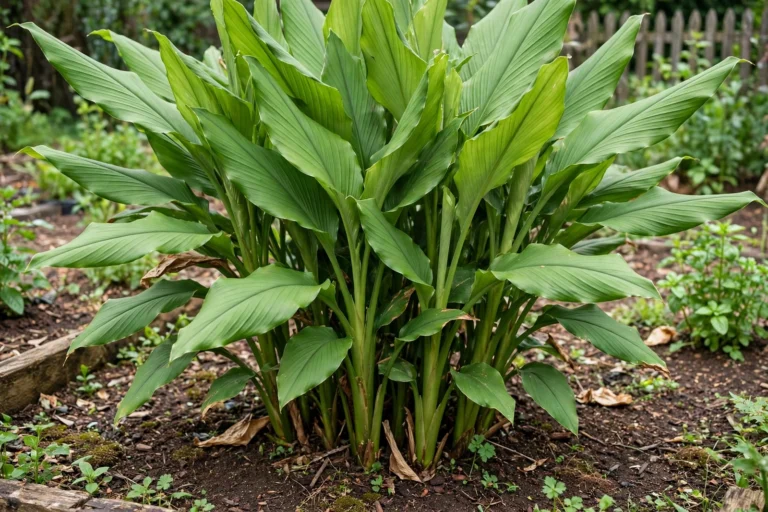
Modern research focuses on curcumin, turmeric's main active compound, which shows anti-inflammatory and antioxidant activity in laboratory and clinical studies. Evidence is strongest for modest support…
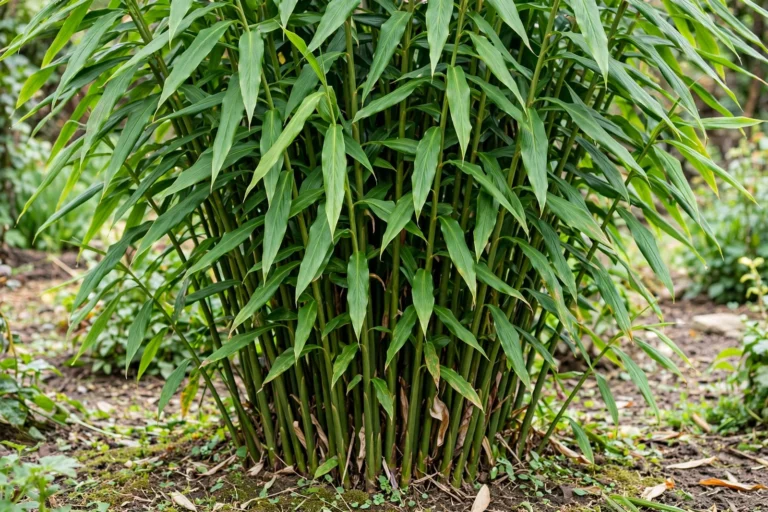
Gingerols and shogaols are the main active compounds. Clinical evidence is best for nausea (including pregnancy-related and motion-related nausea) and for modest relief of digestive discomfort…
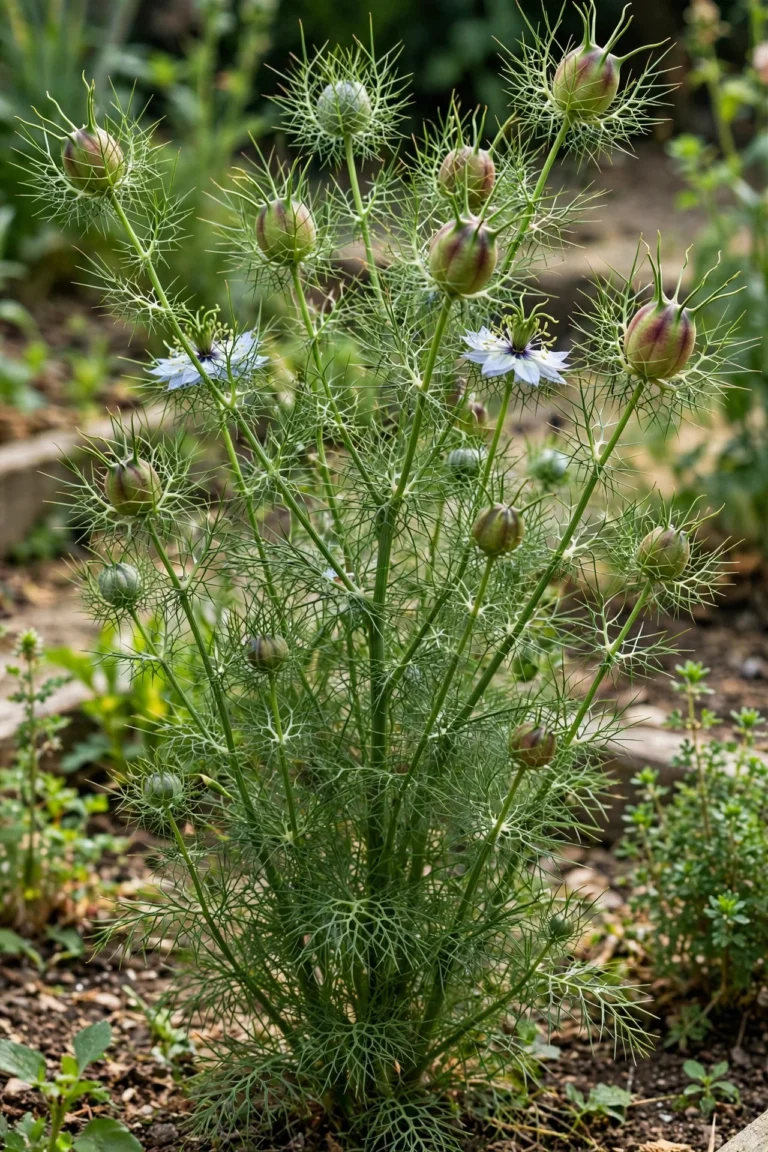
Thymoquinone is the main studied compound. Trials report modest improvements in blood-sugar control, blood pressure and respiratory symptoms, and antioxidant and anti-inflammatory activity in laboratory studies.…