Names in Different Languages
| English | Peppermint |
|---|
| Urdu | پودینہ |
|---|
| Hindi | पुदीना |
|---|
| Farsi | نعناع فلفلی |
|---|
| Unani | Pudina |
|---|
| French | Menthe poivrée |
|---|
| German | Pfefferminze |
|---|
Traditional Uses
In European folk medicine, Ayurveda and Unani medicine, peppermint leaf tea has long been used for indigestion, gas, nausea, colds and headaches, and the oil for muscle rubs and steam inhalation.
Modern Research
Menthol is the main active compound, relaxing intestinal smooth muscle. NCCIH states there is some evidence that enteric-coated peppermint oil capsules can help reduce IBS symptoms over the short term, and the American College of Gastroenterology includes it among approaches that may relieve IBS symptoms — but the recommendation rests on low-quality evidence, and a 2021 trial of 133 people found no difference from placebo. Long-term benefit is not established.
Uses
- IBS support (enteric-coated oil capsules)
- Digestive support (bloating, gas, indigestion)
- Respiratory comfort (congestion, steam)
- Nausea and headache comfort (tea, traditional)
Benefits of Use
- IBS support: enteric-coated oil may reduce IBS symptoms and abdominal pain over the short term
- Digestive support: carminative action may ease bloating, gas and indigestion
- Respiratory comfort: menthol vapour traditionally eases congestion and tension headaches
- Nausea support: tea and oil traditionally used for nausea and upset stomach
Safe Dose & Overdose (mg/g)
Raw Herb Form
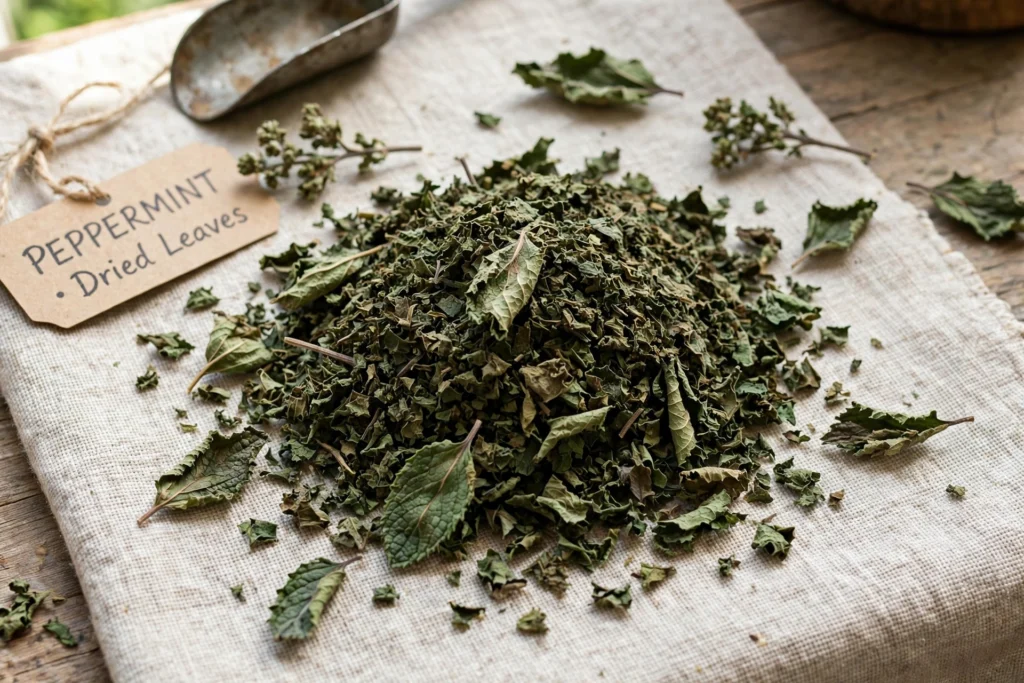
Safe: 1,500-3,000 mg/day dried leaf as tea (1.5-3 g per cup, up to 3 times daily per EU monograph).
Overdose: Not established
Extract Form
Safe: 180-200 mg peppermint oil in enteric-coated capsules, 3 times daily (up to 1,200 mg/day), taken 30-60 minutes before meals.
Overdose: Above 1,200 mg/day peppermint oil: nausea, heartburn, abdominal pain and, rarely, kidney problems reported; never ingest undiluted essential oil.
Side Effects
- Heartburn and reflux, especially if capsules are not enteric-coated
- Nausea, abdominal pain and dry mouth
- Perianal burning in some users
- Allergic reactions (rash, headache) in sensitive users
Interactions
- Antacids and acid reducers (PPIs, H2 blockers): may dissolve the enteric coating early, causing heartburn and weakening the effect
- Cyclosporine: peppermint oil may slow its breakdown and raise its levels
- Liver-processed drugs (CYP3A4 substrates): peppermint oil may alter their levels
- Blood-pressure medicines: may add to blood-pressure-lowering effects in theory
Sources
DisclaimerGeneral information only — not medical advice. Consult a qualified healthcare professional before use.