Names in Different Languages
| English | Triphala |
|---|
| Urdu | تریفلا |
|---|
| Hindi | त्रिफला |
|---|
| Farsi | تریفالا |
|---|
| Unani | Triphala |
|---|
| French | Triphala |
|---|
| German | Triphala |
|---|
Traditional Uses
In Ayurveda, triphala is a classical rasayana and the standard gentle bowel regulator, recorded in the Charaka Samhita as Triphaladi Gana for digestive fire (agni) and cleansing; it is taken daily for digestion, gentle detoxification and overall rejuvenation, and used as a mouthwash for oral health.
Modern Research
A 2017 review in the Journal of Alternative and Complementary Medicine concluded triphala acts as a bowel regulator through several mechanisms — stimulating motility, promoting mucus secretion and modulating gut microbiota. A 2020 randomised trial (Peterson et al.) found 2,000 mg/day for 4 weeks shifted gut microbiota. Immunity claims rest on animal studies and one small human study, and Memorial Sloan Kettering notes human studies are limited and more are needed. Triphala is not included in mainstream constipation guidelines.
Uses
- Digestive support (constipation, regularity)
- Gut and microbiome support
- Immune support (traditional, antioxidant)
- Oral care (mouthwash, traditional)
Benefits of Use
- Digestive support: randomised trials report improved stool frequency and consistency and reduced colonic transit time (up to about 25%) in functional constipation
- Gut support: polyphenols act as a prebiotic, encouraging beneficial Bifidobacterium and Lactobacillus in laboratory and small human studies
- Immune support: a small human study found increased cytotoxic T cells and natural killer cells; antioxidant vitamin C from amla supports general immune function
- Oral support: randomised trials found triphala mouthwash competitive with chlorhexidine for reducing dental plaque and gum inflammation
Safe Dose & Overdose (mg/g)
Raw Herb Form
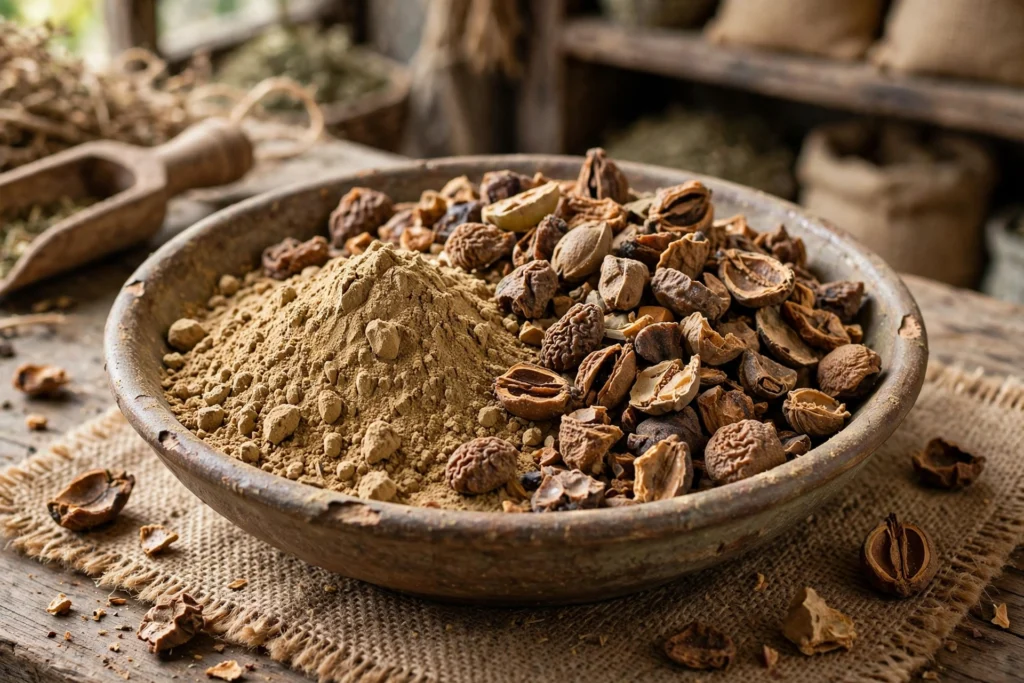
Safe: 3,000-5,000 mg/day triphala powder (about 1 teaspoon with warm water, at bedtime or on an empty stomach); a 2006 clinical study used 2,500 mg twice daily.
Overdose: Not established
Extract Form
Safe: 500-2,000 mg/day standardized extract (commonly 500 mg twice daily; trials most often used 2,000 mg/day for 4 weeks).
Overdose: Not established
Side Effects
- Loose stools, diarrhoea and abdominal cramps, especially at high doses or when first starting
- Nausea and digestive discomfort in some users
- Chronic high intake may reduce iron absorption
- Not recommended in pregnancy or breastfeeding, and not for children — safety not established in these groups
Interactions
- Blood thinners (warfarin): may interact or reduce their effectiveness
- Diabetes medicines: may add to blood-sugar-lowering effects
- Blood-pressure medicines: may add to blood-pressure-lowering effects in theory
- Medicines in general: triphala may reduce absorption of some drugs; take at a different time of day
Sources
DisclaimerGeneral information only — not medical advice. Consult a qualified healthcare professional before use.