Names in Different Languages
| English | Valerian Root |
|---|
| Urdu | والیرین |
|---|
| Hindi | बिल्लीलोटन |
|---|
| Unani | Tagar |
|---|
| French | Valériane |
|---|
| German | Baldrian |
|---|
Traditional Uses
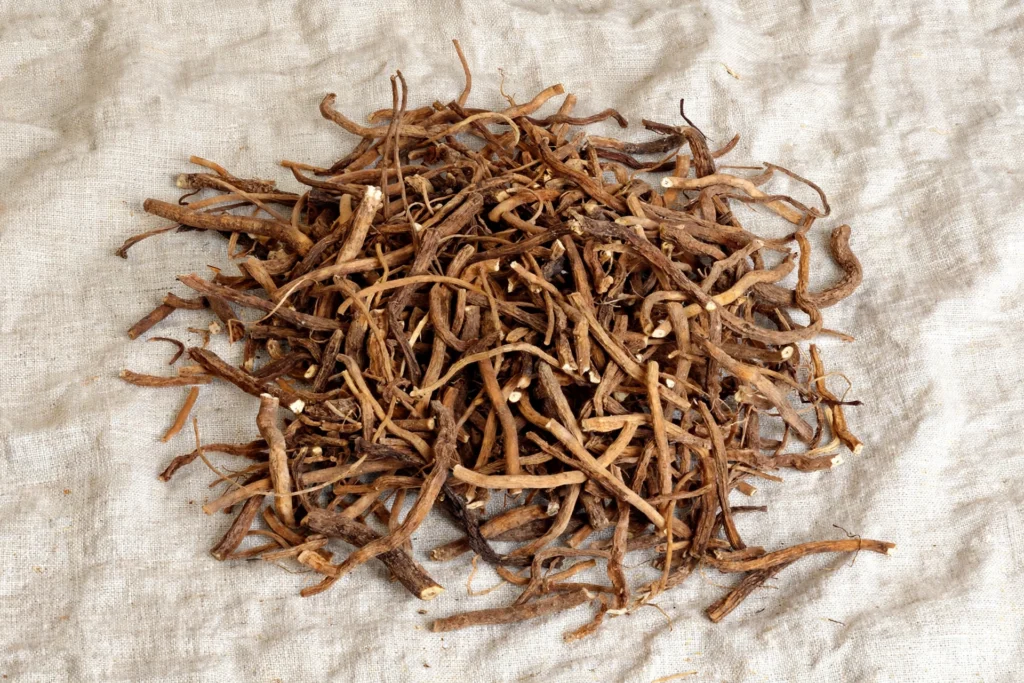
Valerian has been used for centuries as a sedative and calming herb for insomnia, anxiety, restlessness, nervous stomach complaints, headaches and cramps. In Unani and Ayurvedic practice, valerian-type roots (known as Tagar) were used for nervous disorders, and European herbalists valued the root for hysteria, nervous tension and digestive spasms.
Modern Research
Research results are mixed. A review of 16 placebo-controlled trials found some evidence of better sleep quality, but flagged weak methods and publication bias. A 2010 meta-analysis of 18 trials found modest improvement in subjective sleep quality. Valerenic acid, a key compound, enhances GABA-A receptor activity in laboratory studies, which is the proposed basis for the calming effect. The European Medicines Agency recognizes valerian for relief of mild nervous tension and sleep disturbances, with effects usually building over 2-4 weeks of use.
Uses
- Mild nervous tension and restlessness
- Occasional sleeplessness (tea, tincture or standardized extract, 30-60 minutes before bed)
- One of the best-known herbal sleep remedies in Western herbal medicine
Benefits of Use
- Sleep support: may modestly improve subjective sleep quality and reduce time to fall asleep in some adults.
- Stress and tension relief: traditionally used and officially recognized in Europe for mild nervous tension.
- Calmness: compounds such as valerenic acid act on the GABA system in laboratory studies, which is linked to relaxation.
- Digestive comfort: traditionally used for nervous stomach complaints and cramp-like digestive discomfort.
Safe Dose & Overdose (mg/g)
Raw Herb Form
Safe: 2-3 g dried root steeped as tea, 1-2 times daily; the EU herbal monograph range is 0.3-3 g dried root per dose, taken 30-60 minutes before bed.
Overdose: Not established
Extract Form
Safe: 300-600 mg standardized extract (0.8% valerenic acid) 30-60 minutes before bed; the EU herbal monograph lists 400-600 mg of dry extract per dose. Used with apparent safety for up to 6 weeks in studies.
Overdose: Not established
Side Effects
- Headache, dizziness or mental dullness in some users.
- Stomach upset, nausea or abdominal cramps.
- Daytime drowsiness or morning grogginess, especially at higher doses.
- Vivid dreams, excitability or uneasiness in a small number of people; rare paradoxical restlessness.
Interactions
- Alcohol: valerian may add to drowsiness and should not be combined with alcohol.
- Sedatives and sleep medicines (benzodiazepines, barbiturates, prescription sleep aids): may increase sedation.
- Anesthesia: valerian may add to the sedative effect of anesthetics, so surgical teams should be told about its use.
- Other calming supplements or herbs: combined use may increase drowsiness.
Sources
DisclaimerGeneral information only — not medical advice. Consult a qualified healthcare professional before use.