Names in Different Languages
| English | Red Raspberry Leaf |
|---|
| Hindi | रसभरी के पत्ते |
|---|
| Farsi | برگ تمشک |
|---|
| French | Feuille de framboisier |
|---|
| German | Himbeerblätter |
|---|
Traditional Uses
Red raspberry leaf has been used for centuries in European and North American folk medicine as a pregnancy tea, drunk from around 32 weeks of pregnancy to strengthen the uterus and ease labour, and as a remedy for menstrual cramps, diarrhea and sore throats. It does not start labour; it is traditionally described as toning the uterus rather than inducing contractions.
Modern Research
The evidence base is weak and under-developed, resting mainly on one small randomized trial. Simpson et al. (2001) gave 2.4 g of raspberry leaf daily as tablets to 192 low-risk first-time mothers from 32 weeks of pregnancy: the first stage of labour was not shortened, the second stage was about 9.6 minutes shorter and forceps deliveries were fewer (19.3% versus 30.4%), but these differences were not statistically significant, and no replication has followed in 25 years. A 2021 systematic review concluded human studies have shown neither clear harm nor clear benefit. The EMA does not recommend raspberry leaf in pregnancy, breastfeeding or under age 18, because evidence on safety and efficacy is lacking.
Uses
- Traditional late-pregnancy tea to prepare the uterus for labour
- Traditional remedy for painful periods and menstrual cramps
- Used traditionally as a gargle for mild mouth and throat inflammation
- Used traditionally for mild diarrhea and as a general women's tonic
Benefits of Use
- Labour support: the Simpson et al. 2001 randomized trial reported a second stage of labour about 10 minutes shorter and fewer forceps deliveries, though the differences were not statistically significant.
- Uterine tone support: traditionally used to tone and strengthen the uterus in the third trimester, with laboratory studies showing effects on uterine smooth muscle.
- Menstrual comfort support: the EMA traditional-use monograph covers it for minor spasm associated with menstrual periods.
- Blood-sugar support: a small single-dose study found raspberry leaf tea lowered blood sugar and insulin after sucrose, though this was not a placebo-controlled trial.
Safe Dose & Overdose (mg/g)
Raw Herb Form
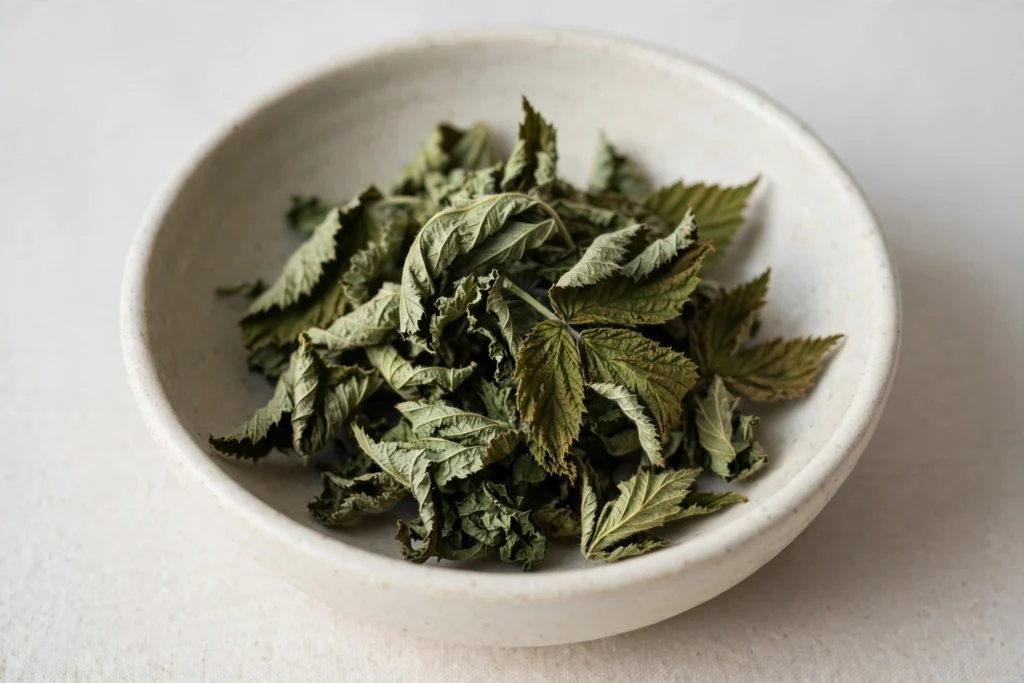
Safe: 1-2 g dried leaf per cup of tea, 1-3 cups daily, starting from around 32 weeks of pregnancy in midwifery practice; the Simpson et al. 2001 randomized trial used 2.4 g leaf daily (1.2 g twice daily) from 32 weeks until labour.
Overdose: Not established
Extract Form
Safe: not established
Overdose: Not established
Side Effects
- Mild diarrhea, nausea or stomach upset in some people
- Increased Braxton Hicks (practice) contractions reported in isolated cases
- Tannins in the leaf may reduce iron absorption if taken in large amounts
- Avoid in the first trimester because of a theoretical miscarriage risk, and avoid with a history of preterm labour or threatened miscarriage
- Caution with gestational diabetes, as it may lower blood sugar and potentiate insulin, and caution after a previous caesarean (VBAC) because of a theoretical uterine rupture risk
Interactions
- Insulin and diabetes medicines: raspberry leaf may lower blood sugar and add to their effect, risking low blood sugar
- Anticoagulant and antiplatelet drugs: theoretical increased bleeding risk; avoid use around labour without medical advice
- Medicines broken down by liver enzymes CYP1A2, CYP2D6 and CYP3A4: raspberry leaf inhibited these enzymes in laboratory tests, though relevance in people is not established
- Oestrogen-sensitive medicines and conditions: use with caution, as traditional sources advise avoiding it with oestrogen-sensitive cancers
Sources
DisclaimerGeneral information only — not medical advice. Consult a qualified healthcare professional before use.