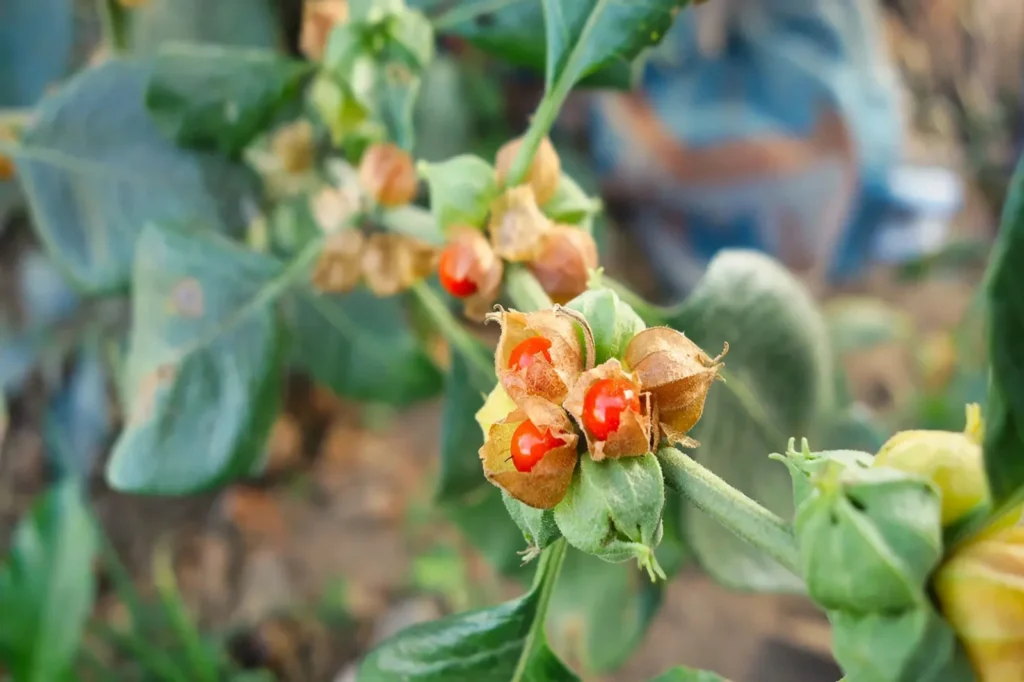
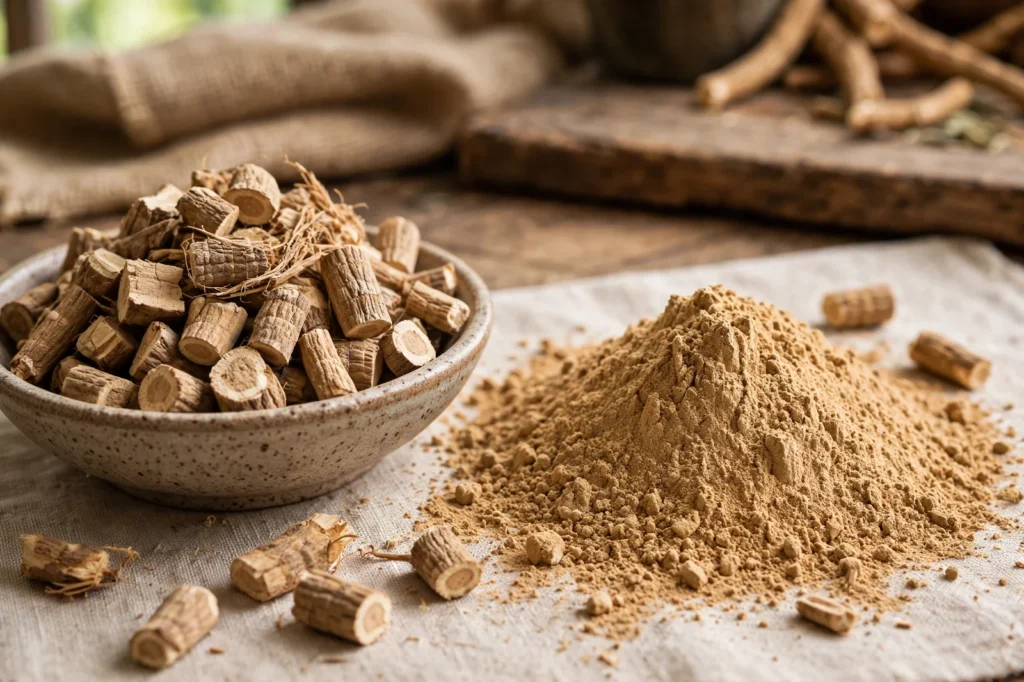
Names in Different Languages
| English | Ashwagandha |
|---|
| Urdu | اشوگندھا |
|---|
| Hindi | अश्वगंधा |
|---|
| Farsi | آشواگاندا |
|---|
| Unani | Asgand |
|---|
| French | Ashwagandha |
|---|
| German | Ashwagandha |
|---|
Traditional Uses
In Ayurveda, ashwagandha root is a classic rasayana (rejuvenating) tonic, traditionally used for stress, fatigue, sleep, strength and general vitality, and as an adaptogen in modern terms.
Modern Research
Standardized root extracts are among the better-studied herbal adaptogens: trials report modest reductions in perceived stress and anxiety scores and small improvements in sleep quality, and some trials report modest strength and testosterone changes in men. Rare liver injury cases have been reported, and safety beyond 3 months is not well established.
Uses
- Stress and anxiety support
- Sleep support
- Energy and strength support
- Immune support (traditional)
Benefits of Use
- Stress-sleep support: may modestly reduce perceived stress and improve sleep quality
- Energy support: may reduce fatigue and improve exercise endurance in trials
- Strength support: some trials report modest strength gains alongside resistance training
- Fertility support: some trials report modest testosterone and semen-quality improvements in men
- Immune support: traditional tonic use, with laboratory evidence of immune-modulating compounds
Safe Dose & Overdose (mg/g)
Raw Herb Form
Safe: 3,000-6,000 mg/day dried root powder (traditional range).
Overdose: Not established
Extract Form
Safe: 300-600 mg/day standardized root extract (KSM-66-type, 5% withanolides), usually 300 mg twice daily.
Overdose: Above 1,000 mg/day: minimal additional benefit with greater side-effect risk; liver injury cases reported at 450-1,350 mg/day; a thyrotoxicosis case reported at 1,950 mg/day.
Side Effects
- Stomach upset, nausea and loose stools
- Drowsiness
- Headache and dizziness in some users
- Rare liver injury reported with extracts
- Thyroid hormone changes reported in rare cases
Interactions
- Thyroid medicines: may increase thyroid hormone levels
- Sedatives and sleep medicines: may add to drowsiness
- Immunosuppressants: ashwagandha may stimulate immune activity and reduce their effect
- Anti-seizure medicines: may interact in theory
- Diabetes and blood-pressure medicines: may add to their lowering effects
Sources
DisclaimerGeneral information only — not medical advice. Consult a qualified healthcare professional before use.