Names in Different Languages
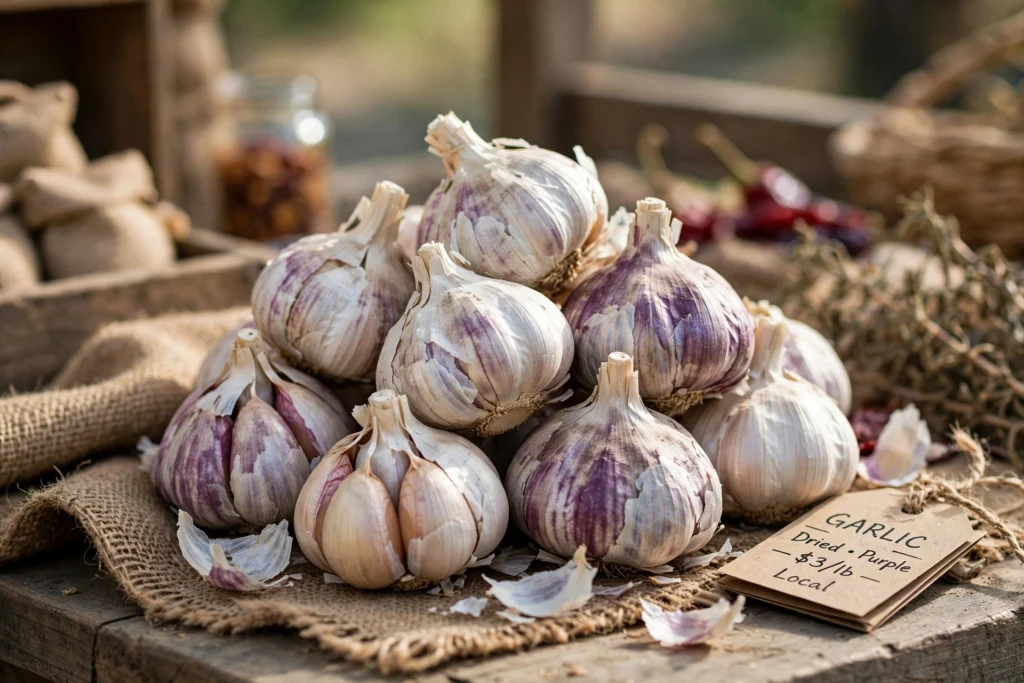
| English | Garlic |
|---|
| Urdu | لہسن |
|---|
| Hindi | लहसुन |
|---|
| Farsi | سیر |
|---|
| Unani | Lehsun |
|---|
| French | Ail |
|---|
| German | Knoblauch |
|---|
Traditional Uses
In Ayurveda, Unani and folk medicine across Asia and Europe, garlic has long been used for colds and coughs, digestive complaints, high blood pressure, wound care and general vitality, eaten raw, cooked or as oil.
Modern Research
Allicin and other sulfur compounds are the main studied components. NCCIH (February 2025) states garlic supplements may reduce total and LDL cholesterol to a small extent, may modestly lower blood pressure in people with hypertension, and may slightly lower blood sugar — but the evidence is limited, effects are small, and garlic is not a substitute for prescribed treatment. Oral garlic has been used safely in studies lasting up to 7 years.
Uses
- Heart support (blood pressure, cholesterol)
- Blood-sugar support
- Immune support (colds, traditional)
- Cooking (culinary staple)
Benefits of Use
- Heart support: supplements may modestly lower blood pressure in people with hypertension (about 8 mm Hg systolic in pooled trials)
- Cholesterol support: may reduce total and LDL cholesterol to a small extent in people with high cholesterol
- Blood-sugar support: may reduce blood sugar to a small extent in people with diabetes
- Immune support: traditional use for colds and general vitality, with laboratory antimicrobial activity
Safe Dose & Overdose (mg/g)
Raw Herb Form
Safe: 3,000-6,000 mg/day fresh garlic (1-2 cloves), crushed or chopped and left to stand 10 minutes before eating to activate allicin.
Overdose: Above 12,000 mg/day fresh garlic (more than 4 raw cloves): stomach irritation, heartburn, strong body odour and increased bleeding risk.
Extract Form
Safe: 300-1,000 mg/day dried garlic powder, or 600-1,200 mg/day aged garlic extract standardized to S-allylcysteine.
Overdose: Above 2,400 mg/day aged garlic extract: gastrointestinal distress and prolonged bleeding time reported in reviews.
Side Effects
- Bad breath and strong body odour
- Heartburn, nausea, bloating and diarrhoea, especially from raw garlic
- Increased bleeding risk and easy bruising, especially with blood thinners
- Skin burns from raw garlic applied directly to skin
Interactions
- Blood thinners (warfarin, aspirin, clopidogrel): may increase bleeding risk
- Diabetes medicines: may add to blood-sugar-lowering effects
- Blood-pressure medicines: may add to blood-pressure-lowering effects
- HIV medicines (saquinavir) and some liver-processed drugs: garlic may speed their breakdown and reduce their levels
Sources
DisclaimerGeneral information only — not medical advice. Consult a qualified healthcare professional before use.