Names in Different Languages
| English | Maca Root |
|---|
| Urdu | میکا |
|---|
| Hindi | माका |
|---|
| Farsi | ماکا |
|---|
| French | Maca |
|---|
| German | Maca |
|---|
Traditional Uses
In the Peruvian Andes, maca root has traditionally been cooked and eaten as a staple food and used as a tonic for fertility, stamina, endurance at high altitude and general vitality; it is traditionally never eaten raw.
Modern Research
Evidence is mixed and modest. A 2016 systematic review in Maturitas (5 trials) concluded maca may improve semen quality but the evidence is limited by small samples and methodological problems. Libido effects are the most consistent finding, in two placebo-controlled trials at 1.5-3 g per day, while testosterone, oestrogen, FSH and LH generally did not change. A 16-week RCT in 50 infertile men found no benefit over placebo, and no trial has measured pregnancy rates, so maca is a supportive food supplement, not a proven fertility treatment.
Uses
- Male fertility and sperm-quality support
- Libido and sexual desire support
- Energy, stamina and mood support
- Menopausal symptom support in traditional and trial use
Benefits of Use
- Sperm quality support: small trials reported higher sperm count, motility and semen volume with 1.5-3 g per day, though one 16-week RCT in infertile men found no difference from placebo
- Libido support: two double-blind trials found improved sexual desire after 8-12 weeks at 1.5-3 g per day, without changes in testosterone
- Energy support: traditional use and small trials suggest better energy and stamina, with modest effects
- Mood support: small trials reported improved mood and reduced anxiety and depression scores in postmenopausal women
Safe Dose & Overdose (mg/g)
Raw Herb Form
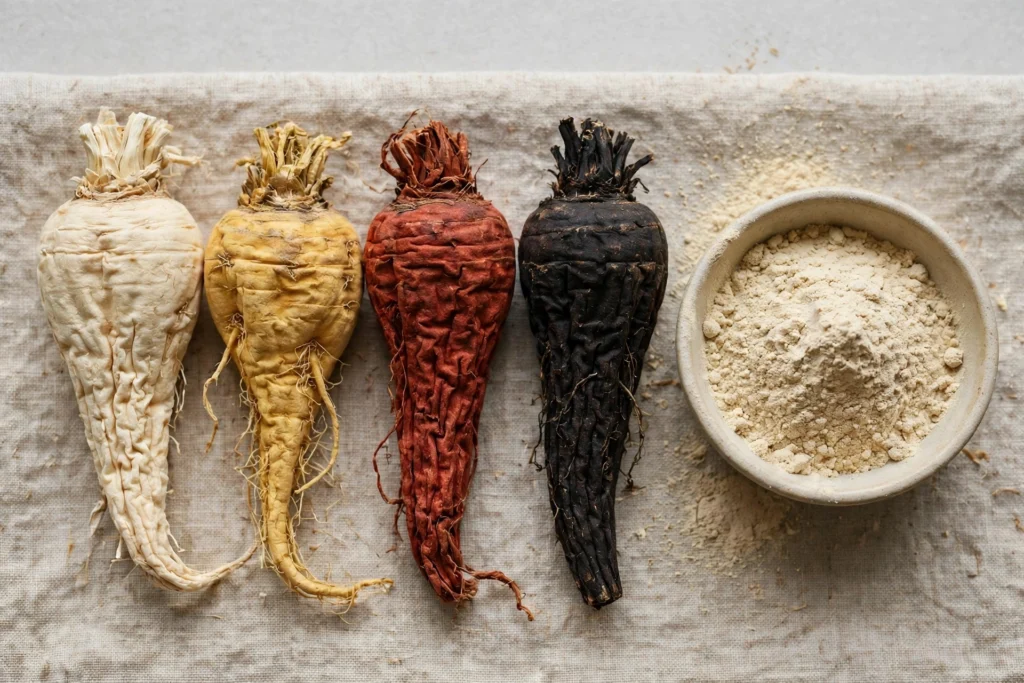
Safe: 1.5-3 g per day of gelatinised maca powder, the dose range most commonly used in clinical trials for 8-16 weeks.
Overdose: Not established
Extract Form
Safe: 450 mg three times daily (1,350 mg per day) of dried maca extract, as cited by Drugs.com; trials also used 2,400 mg per day of dry extract for 12 weeks.
Overdose: Not established
Side Effects
- Digestive upset, gas or bloating, especially with raw (non-gelatinised) maca
- Jitteriness, restlessness or insomnia if taken in high doses or late in the day
- Headaches when starting use in some people
- Possible thyroid interference from glucosinolates in raw maca, especially with low iodine intake
- Avoid in pregnancy and breastfeeding due to lack of safety data
Interactions
- Thyroid medicines (levothyroxine): raw maca glucosinolates may interfere with thyroid function; separate dosing and monitor thyroid labs
- Hormone therapies and hormonal contraceptives: caution is advised, as effects on hormone pathways are not fully understood
- Blood pressure medicines: maca may affect blood pressure in some users
- No major drug interactions are well documented, but caution is advised with hormone-sensitive conditions
Sources
DisclaimerGeneral information only — not medical advice. Consult a qualified healthcare professional before use.