Names in Different Languages
| English | Safed Musli |
|---|
| Urdu | سفید مسلی |
|---|
| Hindi | सफ़ेद मूसली |
|---|
| Unani | Musli Safed |
|---|
| French | Safed Musli |
|---|
| German | Safed Musli |
|---|
Traditional Uses
In Ayurveda and Unani medicine, safed musli root powder with warm milk has long been used for male vitality, low libido, general weakness and as a restorative tonic after illness, and as a nourishing tonic for strength and stamina.
Modern Research
Human evidence is very limited: one small randomised trial (30 men, Rath et al. 2013, Ayu) found improved semen volume, sperm count and motility with 500 mg of water extract twice daily for 12 weeks, but its testosterone result was reported inconsistently, and one small pilot trial (60 volunteers, Tripathi et al. 2019) found better physical performance with 3 g per day for 2 months. Most other evidence comes from animal studies. A review judged the available toxicity and safety studies inadequate, so effects should be treated as preliminary and modest, not curative.
Uses
- Male reproductive and fertility support
- General vitality and stamina tonic
- Physical performance and recovery support
- Immune and adaptogenic tonic in Ayurvedic practice
Benefits of Use
- Male fertility support: a small 12-week trial reported improved semen volume, sperm count and motility with root extract
- Stamina support: a 2-month trial of 3 g per day reported improved walking and exercise performance versus placebo
- Stress resilience support: animal and small human studies suggest adaptogenic activity, though human evidence is thin
- Immune support: traditional use as a Rasayana tonic, with only preliminary laboratory and animal data behind it
Safe Dose & Overdose (mg/g)
Raw Herb Form
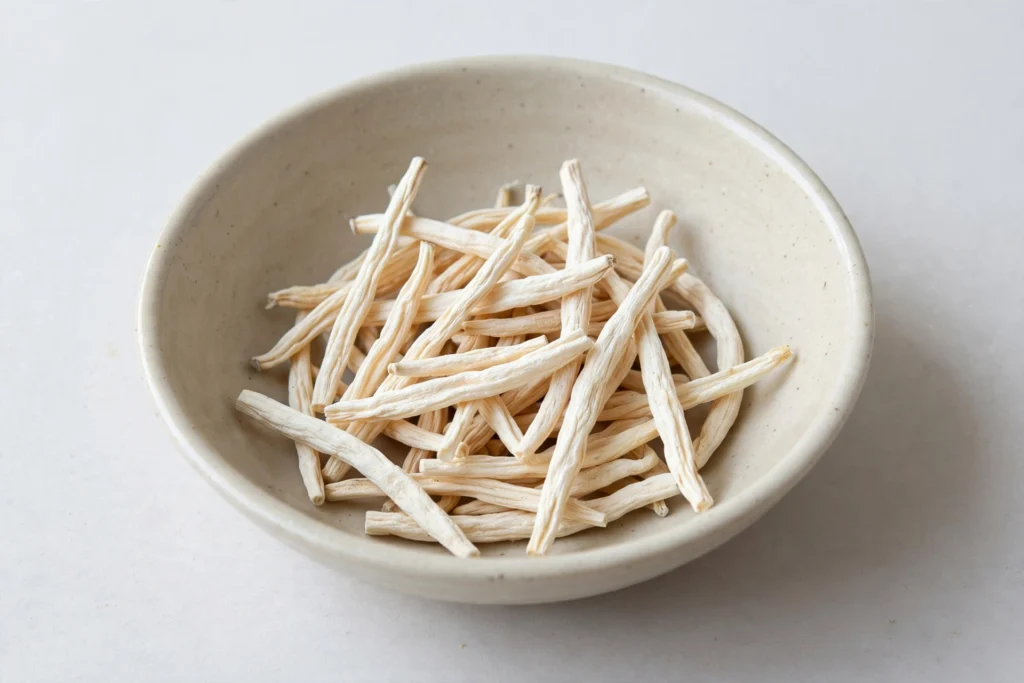
Safe: 3 g per day of dried root powder, as used in a 2-month randomised trial (Tripathi et al. 2019); traditional Ayurvedic references commonly use 3-5 g per day with warm milk.
Overdose: Not established
Extract Form
Safe: 500 mg twice daily (1,000 mg per day) of water extract of the root for 12 weeks, as used in the randomised trial by Rath et al. (2013, Ayu).
Overdose: Not established
Side Effects
- Mild stomach upset, bloating or diarrhoea at high doses
- Possible allergic reaction (rare skin rash or itching)
- No side effects were reported in the two small human trials, but they were too small to judge safety
- Safety in pregnancy and breastfeeding has not been studied; avoid use
Interactions
- Hormone therapies (testosterone, anti-androgens): theoretical concern only, as the herb is marketed for effects on male hormones
- Diabetes medicines: animal data suggest blood-sugar-lowering activity, so blood sugar should be monitored
- Blood pressure medicines: caution is advised, as trial data showed a small blood-pressure effect
- Anticoagulant medicines: no interaction studies exist; use caution as with any saponin-rich tonic herb
Sources
DisclaimerGeneral information only — not medical advice. Consult a qualified healthcare professional before use.