Names in Different Languages
| English | Ginseng |
|---|
| Farsi | جینسینگ |
|---|
| French | Ginseng |
|---|
| German | Ginseng |
|---|
Traditional Uses
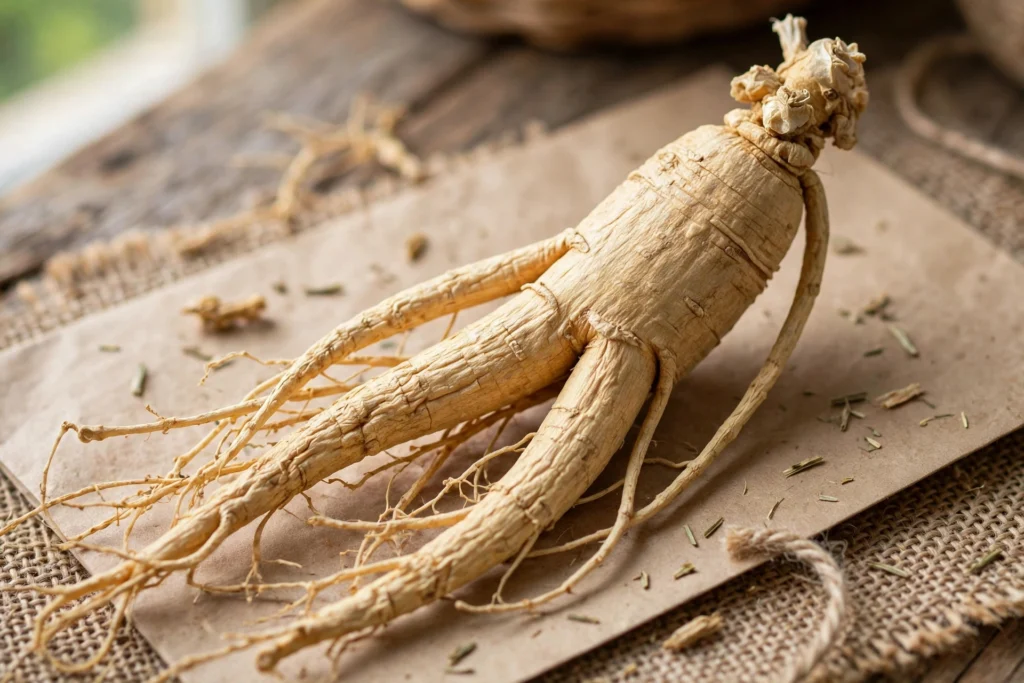
In Chinese and Korean traditional medicine, Panax ginseng root is a classic tonic (ren shen) for vitality, stamina, stress resilience and general weakness, taken as root powder, decoction or steamed red ginseng, usually in the morning.
Modern Research
Ginsenosides are the main studied compounds. NCCIH notes small, short trials: modest support for some types of fatigue and selected aspects of cognition, small blood-sugar improvements, and only a small or trivial effect on erectile function in a Cochrane review of 587 men. Evidence is real but modest and extract-specific; ginseng is a slow adaptogen, not a stimulant, and is not a proven treatment for any condition.
Uses
- Energy and fatigue support
- Cognitive and stress support
- Blood-sugar support (traditional)
- Male vitality support (traditional)
Benefits of Use
- Energy support: may modestly reduce fatigue, with the clearest evidence in cancer-related fatigue
- Cognitive support: small trials report modest improvements in attention, reaction time and mental energy under stress
- Blood-sugar support: meta-analyses report modest fasting glucose and insulin-sensitivity improvements
- Male vitality support: trials report small improvements in erectile function, likely via nitric-oxide pathways
Safe Dose & Overdose (mg/g)
Raw Herb Form
Safe: 1,000-3,000 mg/day dried root powder (traditional range); effects generally build over 2-4 weeks of daily use.
Overdose: No established upper limit; doses above 3,000 mg/day more often cause insomnia, headache and jitteriness; long-term safety beyond 6 months is not well established.
Extract Form
Safe: 200-400 mg/day standardized extract (typically 4-7% ginsenosides), often 200 mg twice daily; Korean red ginseng trials for erectile function used 1,000-2,700 mg/day.
Overdose: Above 1,000 mg/day: increased insomnia, headache and digestive upset reported; no formal upper limit established.
Side Effects
- Insomnia — the most commonly reported side effect, especially with evening doses
- Headache and dizziness in some users
- Digestive upset, nausea and diarrhoea
- Nervousness or jitteriness at higher doses
- Rare reports of severe rash, liver injury and severe allergic reactions
Interactions
- Blood thinners (warfarin, aspirin, clopidogrel): may increase bleeding risk
- Diabetes medicines: may add to blood-sugar-lowering effects
- Stimulant medicines and caffeine: may add to jitteriness and raise heart rate or blood pressure
- MAOIs: rare interactions reported in the literature
- Immunosuppressants: ginseng may stimulate immune activity and reduce their effect
Sources
DisclaimerGeneral information only — not medical advice. Consult a qualified healthcare professional before use.