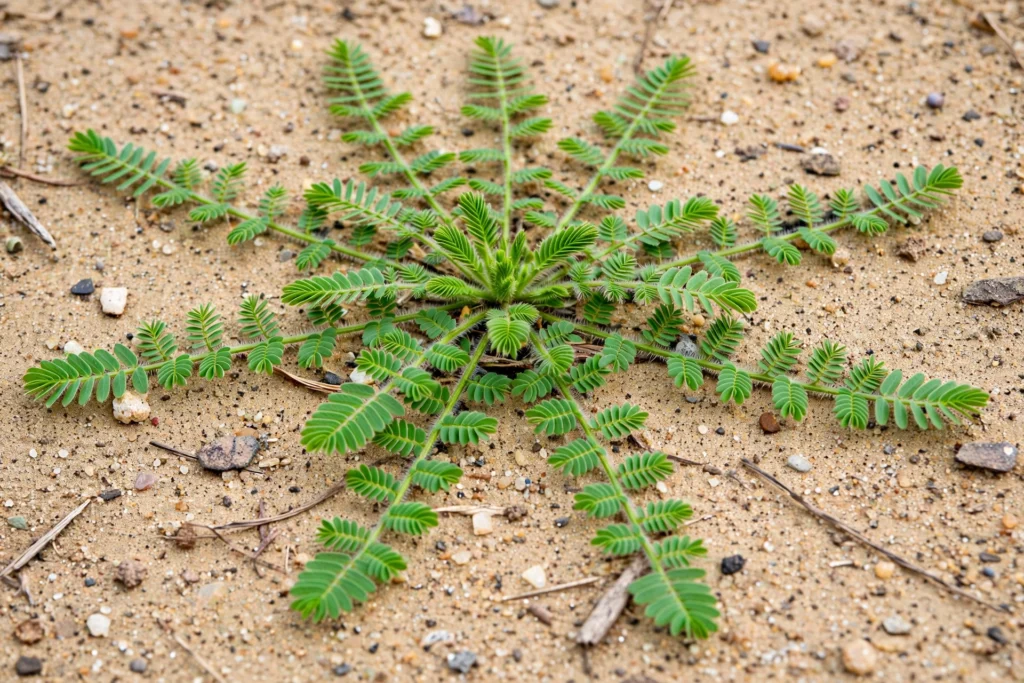
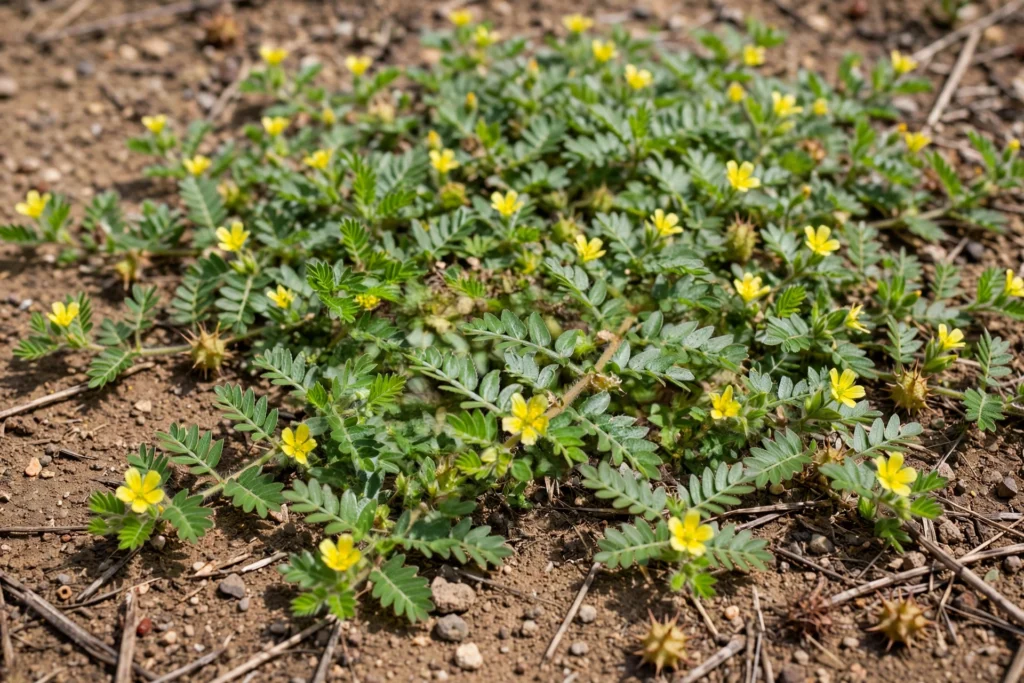
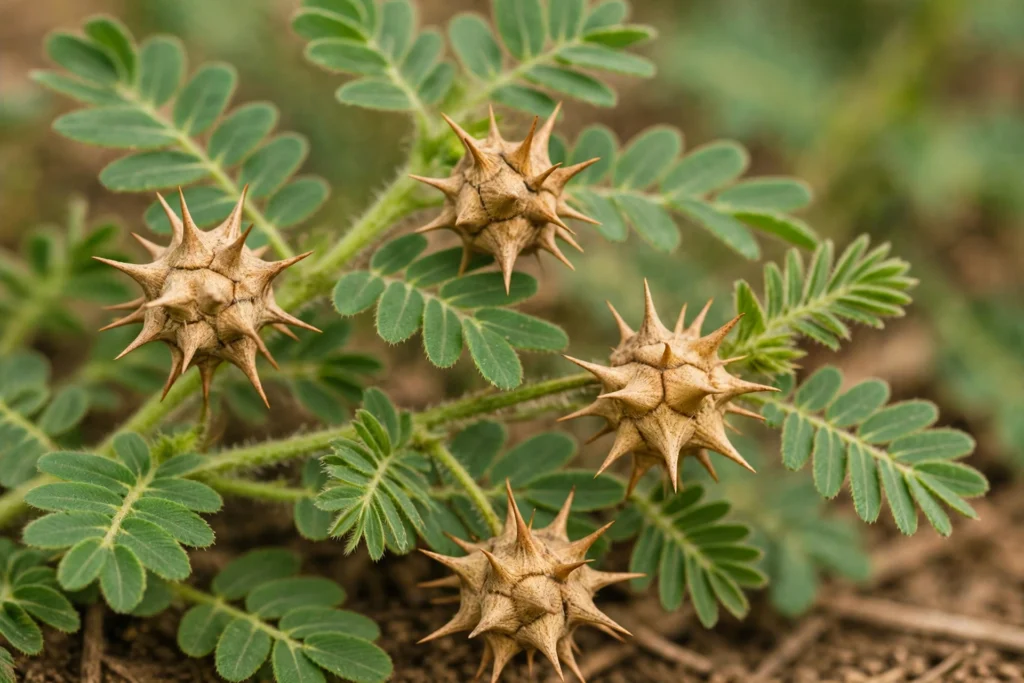
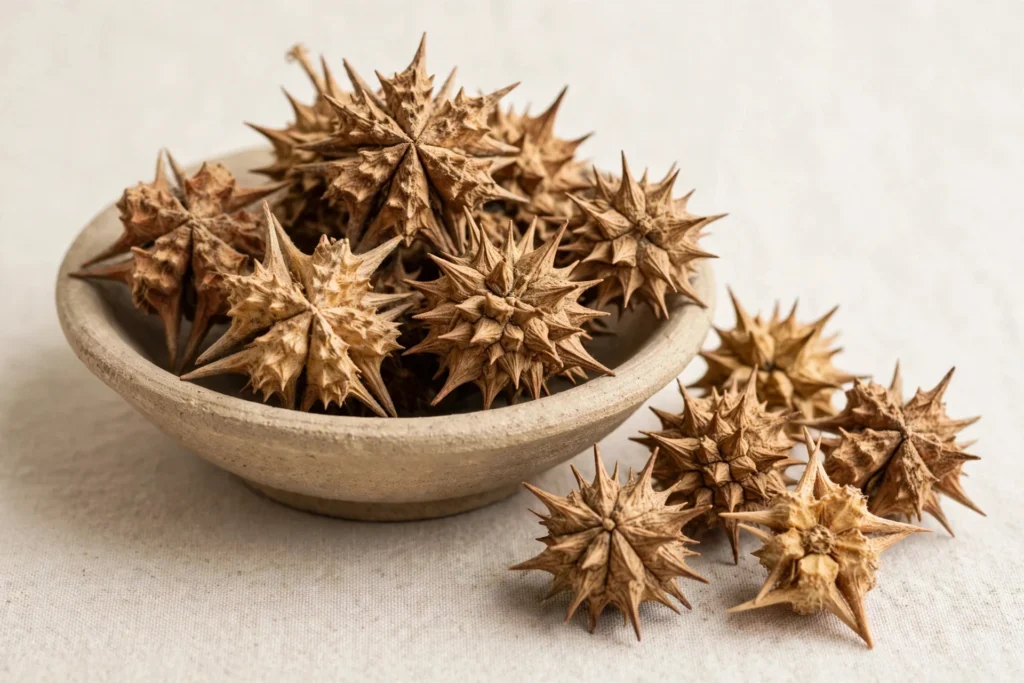
Names in Different Languages
| English | Tribulus Terrestris |
|---|
| Urdu | گوکھرو |
|---|
| Hindi | गोखरू |
|---|
| Farsi | خارخاسک |
|---|
| Unani | Gokhru |
|---|
| French | Tribule terrestre |
|---|
| German | Erd-Burzeldorn |
|---|
Traditional Uses
In Ayurveda, gokshura fruit and root have traditionally been used as a Vrsya (aphrodisiac) for men, a Mutrala (diuretic) for painful or difficult urination, and a tonic for strength; in Traditional Chinese Medicine the fruit is used for headache, dizziness, red eyes and skin itching.
Modern Research
Tribulus is heavily marketed as a testosterone booster, but the evidence does not support that claim: a 2025 systematic review in Nutrients (10 trials, 483 men) found 8 of 10 studies showed no significant change in androgen levels, and a 2026 meta-analysis found no significant difference in total testosterone versus placebo. The more defensible signal is on sexual-function questionnaires, with modest gains and wide confidence intervals. The European Medicines Agency (EMA) concluded in 2024 that safety and efficacy data were insufficient to establish a European monograph, so expectations should stay modest.
Uses
- Libido and sexual-function support
- Male vitality tonic in Ayurvedic practice
- Urinary and diuretic support (traditional)
- Blood sugar and blood pressure support (traditional and preliminary)
Benefits of Use
- Sexual function support: randomised trials reported improved erectile-function and sexual-function scores, including Kamenov et al. (2017) in 180 men over 12 weeks
- Libido support: trials in men and women with sexual dysfunction reported improved desire and satisfaction scores
- Blood pressure support: preliminary evidence suggests a mild blood-pressure-lowering effect
- Blood sugar support: traditional use and small studies suggest a possible blood-sugar-lowering effect, though evidence is limited
Safe Dose & Overdose (mg/g)
Raw Herb Form
Safe: 3-6 g per day of dried fruit powder, per the Ayurvedic Pharmacopoeia of India as cited in the Health Canada monograph; traditional Chinese decoction uses 6-10 g of dried fruit per day.
Overdose: Not established
Extract Form
Safe: 750-1,500 mg per day of standardised extract, the range used in most sexual-health trials; Kamenov et al. (2017) used 750 mg per day for 12 weeks.
Overdose: Not established
Side Effects
- Mild stomach upset, nausea or acid reflux, especially at high doses
- Trouble sleeping or restlessness in some users
- Rare reports of irregular periods, breast enlargement (gynaecomastia) or hair loss
- Isolated severe liver or kidney injury reports involving tribulus-containing products, though direct causality is uncertain
- Contraindicated in pregnancy and breastfeeding and in children under 16; caution with gallstones
Interactions
- Diabetes medicines: may lower blood sugar and add to their effect
- Blood pressure medicines (antihypertensives): may lower blood pressure further
- Blood thinners such as clopidogrel: potential interaction reported; discuss with a clinician
- Statins and other CYP3A4-metabolised drugs: tribulus is a moderate CYP3A4 inhibitor; one case report describes muscle breakdown (rhabdomyolysis) with a statin
Sources
DisclaimerGeneral information only — not medical advice. Consult a qualified healthcare professional before use.